

[ad_1]
A senior Palestinian official shared with Newsweek his reaction to U.S. President Donald Trump‘s suggestion of relocating the entire population of the Gaza Strip in order to pursue real estate development in the war-torn territory.
Trump first publicly floated the proposal last week, telling reporters that “we can just clean out” Gaza by transferring its population, estimated to be between 1.5 million and more than 2 million people, to neighboring Egypt and Jordan. Despite backlash from the two countries and elsewhere across the Arab world, the U.S. leader doubled down on the proposal in recent days and insisted that Cairo and Amman “will do it.”
Faisal Aranki, a member of the Palestine Liberation Organization (PLO) Executive Committee, told Newsweek that the proposal “is controversial and raises many humanitarian and political issues.”
“On the one hand, some see it as an immoral step that exposes Palestinians to additional suffering, especially since the forced displacement of people is a violation of human rights and leads to further escalation and conflict,” Aranki said.
“On the other hand, some may see it as part of an attempt to find a long-term solution to the Palestinian issue,” he continued, “but there are always concerns that such solutions marginalize the basic rights of Palestinians to return and live in dignity on their land.”
He argued that “ultimately, any proposal related to the Palestinian issue must take into account human rights and justice, rather than focusing on short-term solutions that may exacerbate the situation in the region.”
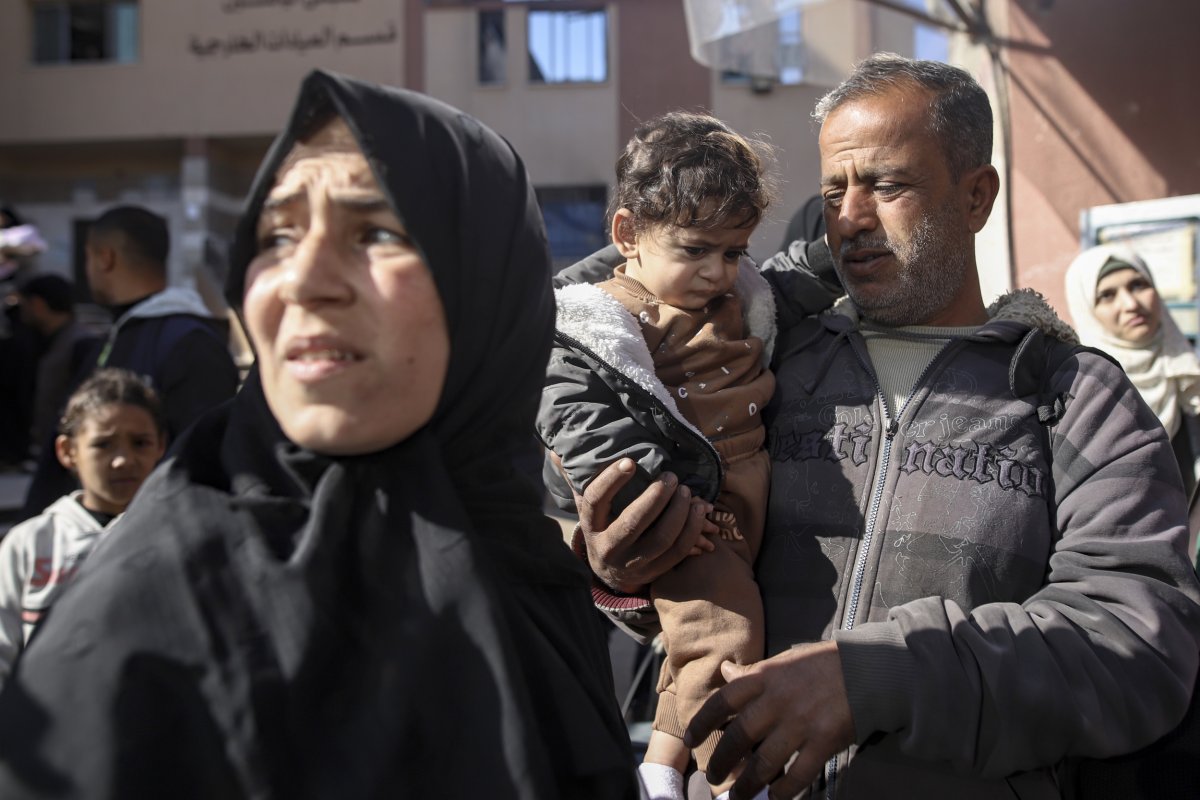
Jehad Alshrafi/AP
Why It Matters
Trump has taken full credit for the temporary ceasefire reached between Israel and the Palestinian Hamas movement just days before he took office last month. The six-week truce is part of a three-phase proposal first outlined by then-President Joe Biden last May, but a breakthrough came after the incoming Trump administration deployed its team to the negotiations being held in the Qatari capital of Doha.
Even as the two sides largely uphold the cessation of hostilities and swap prisoners, however, uncertainty surrounds the next steps for the conflict that began with a Hamas-led attack on Israel on October 7, 2023. Israeli Prime Minister Benjamin Netanyahu has vowed to continue the fight until Hamas was entirely defeated, and the Israeli premier and Trump have stated that the Islamist Palestinian group could not be allowed to lead in Gaza after a lasting peace agreement.
Without specifically addressing how Gaza could be governed after the conflict, Trump, a former celebrity real estate mogul, has frequently focused on the potential property value of the coastal Mediterranean territory. Referring to Gaza in its current state as a “demolition site,” he said the transfer of its population “could be temporary” or “long term” as reconstruction and development commenced.
PLO officials have previously expressed openness to a Biden administration plan to transfer control of Gaza back to the Palestinian National Authority (PA), led by President Mahmoud Abbas, who also heads the PLO’s top Fatah faction. Yet the PLO and Hamas have argued that only Palestinians should be responsible for determining their future.
What To Know
Gaza was under Israeli military occupation from for nearly four decades after the territory was seized from Egypt in the Six-Day War of 1967. Hamas emerged during this time as a splinter of the Muslim Brotherhood movement and grew in influence through its commitment to armed struggle at a time when the traditional vanguard of the Palestinian independence movement, the PLO, was leaning toward diplomacy.
After Israel fully withdrew that from Gaza in 2005, Hamas won the highest share of votes in the 2006 Palestinian elections, the last to be held, leading to a direct clash between the group and Fatah. Hamas seized control of Gaza in 2007 and has governed the territory ever since, engaging in several direct wars with Israel, the latest of which is by far the longest and deadliest.
The Gaza-based Palestinian Health Ministry has counted more than 47,500 deaths in the territory since Israel launched its war over the Hamas-led attack that Israeli officials estimate killed about 1,200 people. More than 400 Israeli troops have also been killed in the operation, which was expanded to Lebanon, Syria and Yemen as Iran-aligned Axis of Resistance groups joined the fight in support of Hamas.
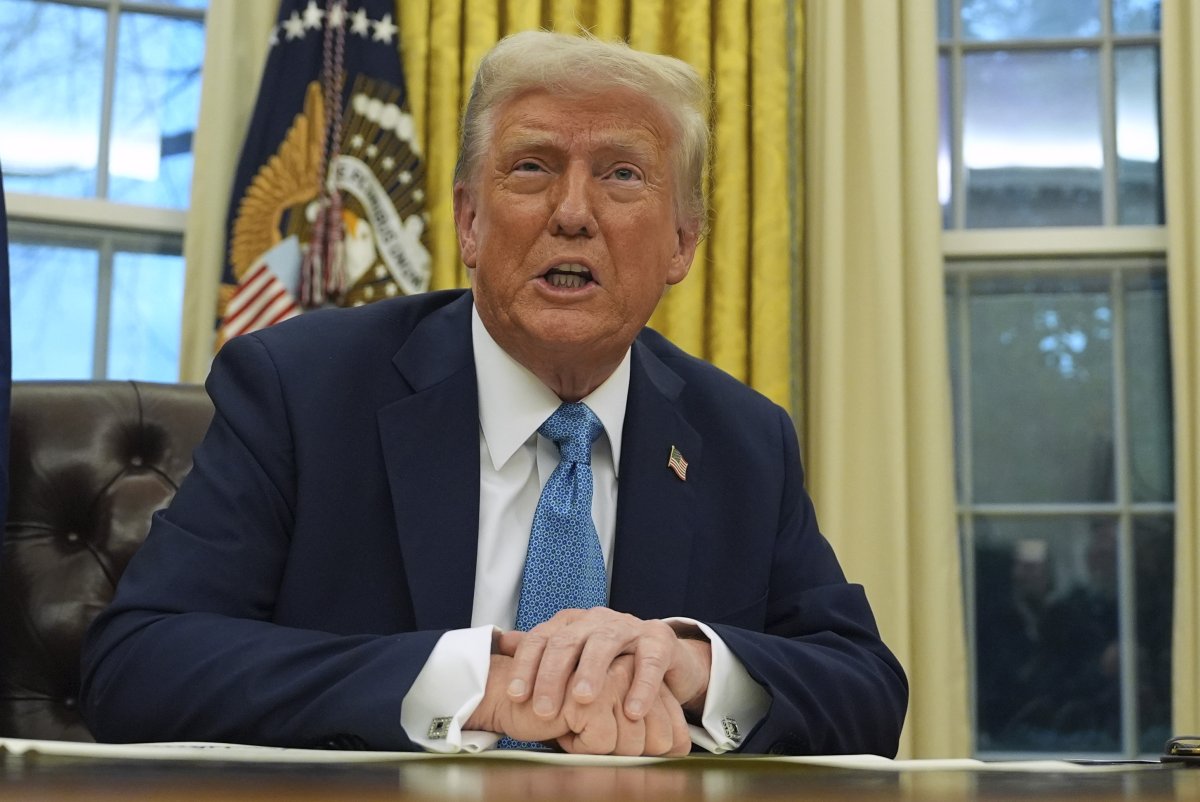
Evan Vucci/AP
What People Are Saying
President Donald Trump, addressing regional reactions to his Gaza population transfer proposal during press conference on Friday: “I think Jordan will take people, yeah, people from Gaza, and I think Egypt will take them also. I heard somebody said they’re not going to, but I think they will. I feel confident they will.”
The Egyptian Foreign Ministry, in a statement issued January 26 following Trump’s initial comments: “[The ministry] also stressed its rejection of any infringement of those inalienable rights, whether through settlement or annexation of land, or by evicting that land from its owners through displacement or encouraging the transfer or uprooting of Palestinians from their land, whether temporarily or long-term, in a manner that threatens stability and threatens the further spread of conflict to the region, and undermines the chances of peace and coexistence among its peoples.”
Jordanian Foreign Minister Ayman al-Safadi, during a press conference on January 26: “No to displacement. Not only because it is a fixed historical Jordanian national position, but also because any attempt to displace Palestinians from their land will only contribute to undermining security and stability, will not achieve peace, and will not bring security.
“No to any solution to the Palestinian issue at the expense of Jordan, or at the expense of the Palestinian people’s right to their homeland, freedom, sovereignty and dignity on their land. No to an alternative homeland. No to any attempt to diminish the rights of the Palestinian people.”
What Happens Next
Trump’s plan has yet to win any international backers. However, his assertion that the U.S. does “a lot” for Egypt and Jordan at a time when his administration was conducting a review of foreign assistance raised the possibility of the White House leveraging aid in an attempt to enforce its position on the issue.
[ad_2]
Source link